
November 12, 2026
Buying a Home on Marco Island
Canals, beachfront, flood zones and homestead — what to know before you buy on Marco Island.
Marco Island is a barrier island in Collier County, about 20 miles south of Naples — the largest island in the Ten Thousand Islands chain, with about six miles of beach. It was developed by the Deltona Corporation in the 1960s and reincorporated as the City of Marco Island on August 28, 1997. Buying here is different from buying on the mainland: the water is the point, and the water is also what you have to check first.
Know the waterfront types
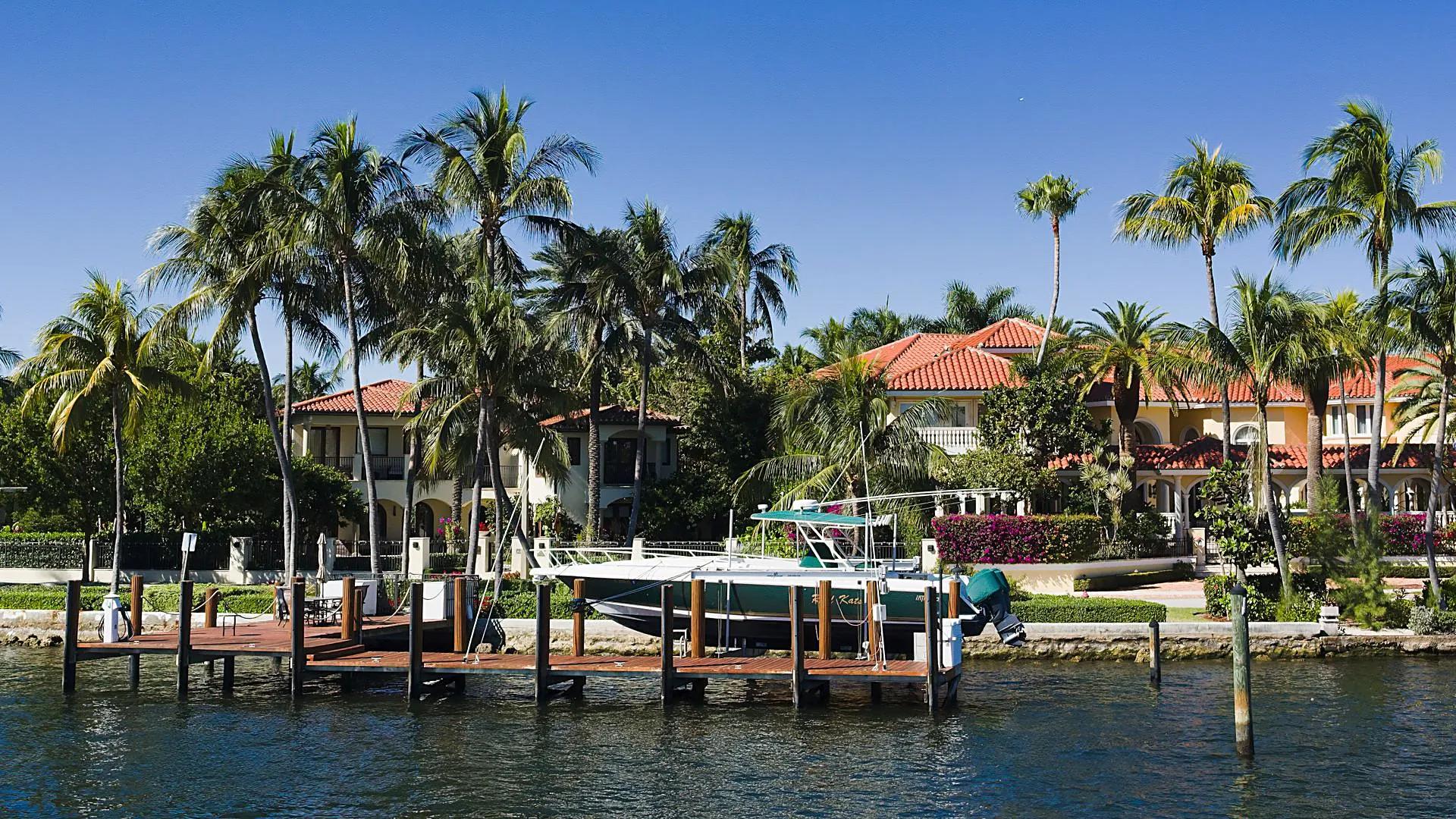
The island was platted around a canal system of roughly 90 miles of dredged canals. That gives you three kinds of waterfront to choose from:
- Canal-front homes — a private dock behind the house. Most canal homes reach the Gulf without a lock. Water reaches the Gulf through the Marco River and Capri Pass to the north and Big Marco Pass and Caxambas Pass to the south.
- Bay-front homes — on Smokehouse Bay, Collier Bay or Barfield Bay, with wider water views and often deeper water.
- Direct Gulf beachfront — homes on the sand itself, mostly on the island's west side.
Two things separate comparable canal homes: dock depth and bridge clearance. Some properties sit behind a bridge, and clearance is property-specific — it has to be checked for the exact house, not assumed for the street. The same goes for water depth at the dock at low tide. In a condo, dockage is often a deeded or assigned slip rather than a private dock, so ask what exactly comes with the unit.
Flood zones and insurance
Most of Marco Island sits in a FEMA flood zone, so this is not a footnote — it is part of the purchase decision.
- Collier County's current flood maps (FIRMs) took effect February 8, 2024. Most of Marco Island is Zone AE, with base flood elevations of 8–12 feet (NAVD88). Zone VE applies along Gulf-facing beachfront, and there are pockets of Zone X.
- If you finance with a federally backed mortgage in the Special Flood Hazard Area, flood insurance is mandatory. A standard homeowners policy does not cover flood.
- Ask for the elevation certificate before you commit. It shows the structure's elevation against the base flood elevation, and it is what your flood quote is built on.
- Know the FEMA 50% rule: if a home is substantially damaged or improved by more than 50% of its market value, it has to be brought up to current flood standards.
- Marco Island is in Collier County Evacuation Zone A.
Florida law adds another wrinkle: under Florida Statute 627.715, Citizens personal residential policies with wind coverage must also carry flood insurance. Inside the flood zone that has applied since 2023; outside the flood zone it was phased in by coverage value — $600,000 and up from January 1, 2024, $500,000 and up from January 1, 2025, $400,000 and up from January 1, 2026, and all remaining policies from January 1, 2027. (Condo unit-owner and tenant-contents policies and policies that exclude wind and hail are exempt.) And a new NFIP flood policy generally takes effect 30 days after purchase, so do not leave the quote until the week of closing.
Homestead exemption — and what Amendment 3 changes
Florida's homestead exemption is one of the real financial reasons people buy here, and it changed in November 2026.
- Today, the first $25,000 of assessed value is exempt from all property taxes, and up to another $26,411 on assessed value above $50,000 is exempt from non-school taxes — a combined maximum of $51,411 for non-school levies in 2026.
- The Save Our Homes cap limits annual assessed-value increases to 3% or CPI, whichever is lower.
- You can transfer up to $500,000 of accumulated Save Our Homes benefit to a new Florida home (portability).
- You apply by March 1 with Form DR-501 to the county property appraiser.
Amendment 3, passed by Florida voters on November 3, 2026 with about 62% of the vote and effective January 1, 2027, raises the non-school homestead exemption to up to $150,000 in 2027 and $250,000 in 2028, inflation-adjusted from 2029. The $25,000 school exemption stays unchanged. The amendment also cuts the annual assessment cap for non-homestead property from 10% to 5%. One detail for newcomers: people who were not Florida residents on December 31, 2026 keep the existing exemption until their fifth year of residency. The first bills showing the change arrive in November 2027.
What to check before you buy
- Elevation certificate and flood zone for the exact address — get a flood quote early, not at the last minute.
- Dock depth and bridge clearance if the home is on a canal — measured, not assumed.
- Inspection — including the roof, seawall and dock where they apply.
- Title and survey — easements and setbacks matter more on waterfront lots.
- Association documents if it is a condo — what the slip, the fees and the rules actually cover.
- Homestead filing — file by March 1 after you close.
Buying with Manuela
Manuela Schinagl has lived in Florida since 1993 and has been a licensed realtor since 2009. She knows Marco Island's canals, beachfront and communities from her own listings. Her accompaniment is free for buyers in most cases — other purchase costs such as attorney, inspection, appraisal and closing costs still apply.
If you are thinking about a home on Marco Island, call Manuela at (239) 450-5622 or send a message through the contact form. Tell her what kind of waterfront you want and how you plan to use the boat — she will show you homes that fit both.
Talk to Manuela
Buying or selling on Marco Island? Call Manuela at (239) 450-5622 or send a message — she will tell you what your next step looks like.