
Buying a Home in Florida
The contract, the inspection clock, flood insurance, homestead and condos — the real information every buyer needs, in plain words.
General information, not legal or tax advice — confirm the details with your attorney, CPA or title company before you sign anything. For the Marco Island version of this guide, see Buying a Home on Marco Island.
The Florida contract in plain words
Most resale deals in Florida use the Florida Realtors / Florida Bar “AS IS” Residential Contract for Sale and Purchase. “As is” means the seller is not obligated to make repairs. It does not mean you buy without inspecting — and it does not remove the seller’s duty to disclose what they know (see Selling a Home in Florida).
The inspection period is the number of days you write into the contract — commonly 7 to 15 days. If the blank is left empty, it is 15 days after the Effective Date. The Effective Date is the day the last party signed the final version and the signed copy was delivered; counting starts the day after. Time is counted in calendar days — weekends count. If the last day falls on a Saturday, Sunday or national legal holiday, the deadline moves to the next day that is not one.
During the period you can cancel for any reason, in your sole discretion, by written notice before the deadline — and your deposit comes back. Or you can ask for a repair, a credit or a price adjustment; the seller can say no. After the deadline the right to cancel is gone and the deposit is at risk. Inspections you already paid for are your cost either way.
Book inspections on day one: a general home inspection, WDO (termites), wind mitigation, and a 4-point inspection if your insurer asks for one. Get the flood quote and the elevation certificate early, too — a new NFIP flood policy generally takes effect 30 days after purchase.
Money before you offer
Get pre-approved before you offer, so you know your number and the seller knows you are serious. And know the buyer’s closing costs in Florida before you commit: mortgage doc stamps are $0.35 per $100 plus 0.2% intangible tax, and in Collier County the buyer customarily pays for the owner’s title insurance policy. Lender fees, appraisal, survey and attorney are on top of that.
Waterfront checks
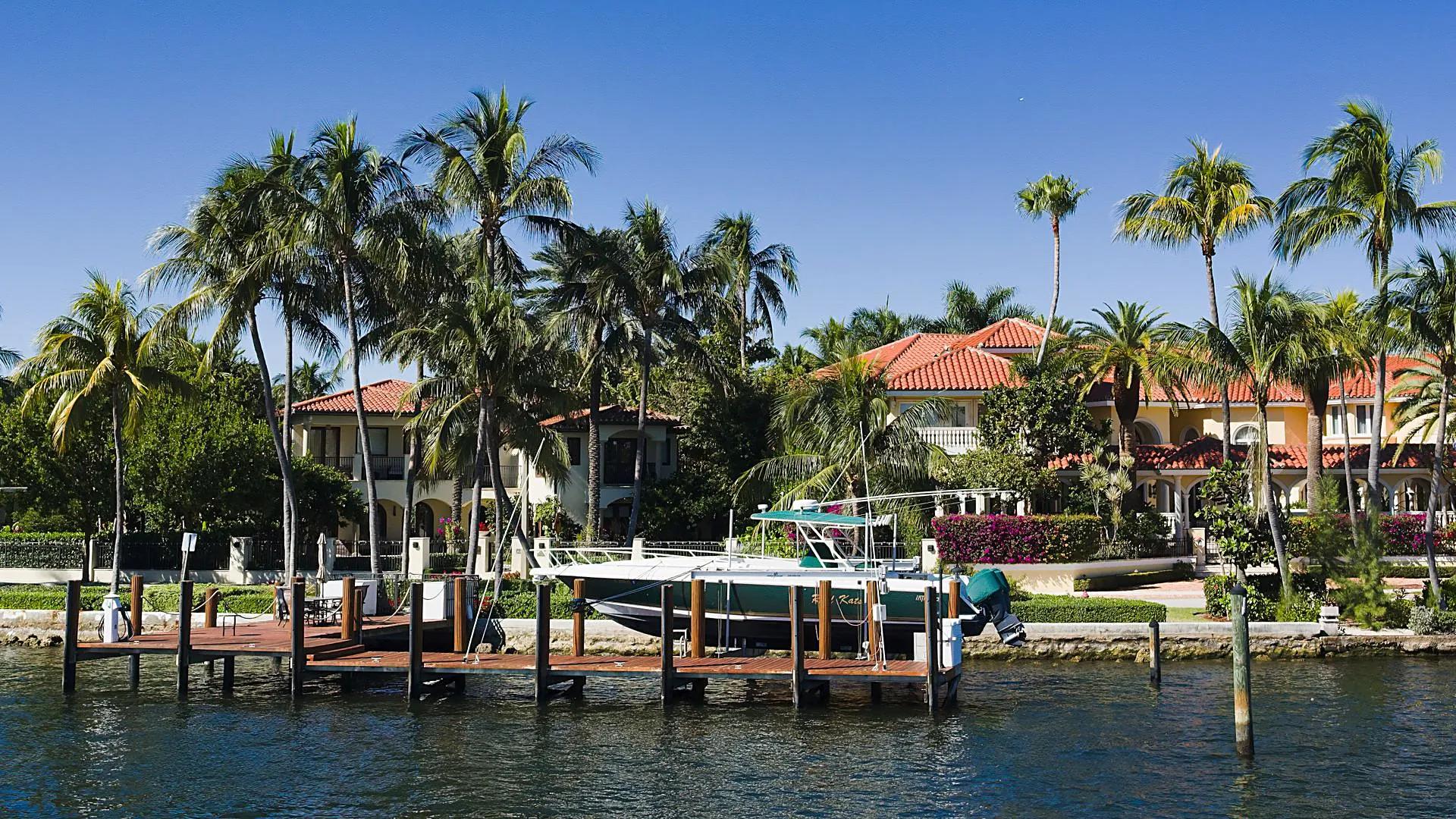
On Marco Island and across Southwest Florida, the water is the point — and the first thing to check. There are three kinds of waterfront: canal-front homes with a private dock, bay-front homes with wider water views, and direct Gulf beachfront. Two things separate comparable canal homes: the water depth at the dock and the bridge clearance, if the home sits behind a bridge. Both are property-specific — measured for that exact house, not assumed for the street. In a condo, dockage is often a deeded or assigned slip rather than a private dock, so ask what exactly comes with the unit. Have the seawall and dock checked in the inspection.
Flood and insurance
Most of Marco Island sits in a FEMA flood zone, so this is part of the purchase decision, not a footnote. Collier County’s current flood maps (FIRMs) took effect February 8, 2024. Most of Marco Island is Zone AE, with base flood elevations of 8–12 feet (NAVD88). Zone VE applies along Gulf-facing beachfront, and there are pockets of Zone X.
If you finance with a federally backed mortgage in the Special Flood Hazard Area, flood insurance is mandatory. A standard homeowners policy does not cover flood. Ask for the elevation certificate before you commit — it shows the structure’s elevation against the base flood elevation, and it is what your flood quote is built on. Know the FEMA 50% rule: if a home is substantially damaged or improved by more than 50% of its market value, it has to be brought up to current flood standards. Marco Island is in Collier County Evacuation Zone A.
Florida law adds another wrinkle: under Florida Statute 627.715, Citizens personal residential policies with wind coverage must also carry flood insurance. Inside the flood zone that has applied since 2023; outside the flood zone it was phased in by coverage value — $600,000 and up from January 1, 2024, $500,000 and up from January 1, 2025, $400,000 and up from January 1, 2026, and all remaining policies from January 1, 2027. (Condo unit-owner and tenant-contents policies and policies that exclude wind and hail are exempt.)
Homestead — and what Amendment 3 changes
Florida’s homestead exemption is one of the real financial reasons people buy here. Today, the first $25,000 of assessed value is exempt from all property taxes, and up to another $26,411 on assessed value above $50,000 is exempt from non-school taxes — a combined maximum of $51,411 for non-school levies in 2026. The Save Our Homes cap limits annual assessed-value increases to 3% or CPI, whichever is lower. You can transfer up to $500,000 of accumulated Save Our Homes benefit to a new Florida home (portability). You apply by March 1 with Form DR-501 to the county property appraiser.
Amendment 3, passed by Florida voters on November 3, 2026 with about 62% of the vote and effective January 1, 2027, raises the non-school homestead exemption to up to $150,000 in 2027 and $250,000 in 2028, inflation-adjusted from 2029. The $25,000 school exemption stays unchanged. The amendment also cuts the annual assessment cap for non-homestead property from 10% to 5%. One detail for newcomers: people who were not Florida residents on December 31, 2026 keep the existing exemption until their fifth year of residency. The first bills showing the change arrive in November 2027.
Condos and HOAs
Buying a condo has a second set of rules. On a resale, the seller must give you, at the seller’s expense, the declaration of condominium, the articles of incorporation, the bylaws and rules, the most recent financial statement and budget, the “Frequently Asked Questions and Answers” document, the milestone inspection summary and the most recent structural integrity reserve study (SIRS) — or a statement that none exists — plus a governance form.
Your contract will contain one of two clauses: either you acknowledge you received those documents more than 7 days (excluding Saturdays, Sundays and legal holidays) before signing — or you can cancel within 7 such days after signing and receiving them. The window used to be 3 days; it changed on July 1, 2025. Buying a new condo from a developer works differently: you have 15 days after signing and receiving all required disclosures, and the developer may not close during that period without your agreement.
The milestone inspection (Florida Statute 553.899) and the SIRS (Florida Statute 718.112(2)(g)) apply to condominium and cooperative buildings three or more habitable stories tall. The first milestone inspection is due by December 31 of the year the building turns 30 — the local enforcement agency can require it at 25 years near the coast — and then every 10 years. A SIRS is required at least every 10 years. Since the Surfside collapse, reserves for the structural items in a SIRS can no longer be waived. If the association was required to complete a milestone inspection or a SIRS and has not, the contract must say so.
Before closing, ask for the estoppel certificate — what the seller owes the association. The association must issue it within 10 business days of a written request. The fee may not exceed $250 when nothing is delinquent, plus $100 if you need it expedited within 3 business days. Finally, read the rules that actually bind you: pet, vehicle and rental limits. Short-term rental rules matter on Marco Island and are property-specific — what one home allows, the next may not.
The closing timeline
Offer → Effective Date → inspection period → financing and appraisal → title and survey → condo/HOA documents and any rescission window → final walk-through (the day before or the day of closing) → closing. Cash with no complications is fastest; a financed purchase with flood insurance takes longest. There is no fixed day count — ask Manuela for a realistic timeline for the specific home.
Buying with Manuela
Manuela Schinagl has lived in Florida since 1993 and has been a licensed realtor since 2009. She knows Marco Island’s canals, beachfront and communities from her own listings. Her accompaniment is free for buyers in most cases — her compensation is usually covered through the seller’s side of the transaction, as agreed in writing in advance. Other purchase costs still apply: attorney, inspection, appraisal and closing costs.
Start with the homes for sale now — search homes or browse the communities. More questions? The FAQ answers the ones buyers ask most. Buying as an investment rather than a home? See Investing in Florida.
Tell Manuela what you are looking for
Call Manuela at (239) 450-5622 or send a message — she answers personally, and she will send you matching homes, including homes before they hit the market.